Tuesday, 29 January 2013

State of the Union


Well, as you can see I'm slowly getting into the swing of things and am slowly filling up the pages of the Blog with various reviews. At the moment I'm slightly amazed at how broad my readership is - with readers from South Africa, America, Germany and Brazil supplementing my UK base. So dankie, thanks, danke and obrigado - please send it all around to your pals and I'd love to hear some comments at some point. I always enjoy hearing a second opinion on a wine and mine is by no means that of a professional. Equally, any comments on how I review or any wines you'd like to see reviewed (within reason) would be welcomed - I know I write rather flowery reviews, but I quite enjoy the chance to be a little silly.


As things go on I hope to review all the wines I have taken notes on over the last year or so (somewhere around 90), so there will be a little bit more balanced with some more negative reviews coming in. At the moment, I'm sticking to the positive ones as those were the ones I enjoy writing about the most. At some point I plan on reviewing some wine websites and shops, but there are one or two little points I need to address before that (mainly securing a wider readership and ensuring I don't end up libelling someone by mistake!). Other ambitions include working out how to start cataloguing things properly into reviews by country, grape, flavour etc., but I don't think that will be worthwhile or realistic until I've managed to get a fair few more reviews down.

So there we are. A brief gap in the reviews, then back to the bottle. Happy glugging!


Image nabbed from Symposium Wines. Thanks chaps.

Te Mata Cape Crest Sauvignon Black 2010

Whilst I was going through a bit of a Kiwi Sauv Blanc phase, notably covering Saint Clair Pioneer Block 3, I stumbled across the highly original concept of an oaked Sauvingnon Blanc. Being a fan of both oaked whites and Sauvignon Blanc, I thought this might be worth a go.

Te Mata's SB is barrel fermented with an addition of a touch of Sauvignon Gris and Semillon in order to give a bit of balance and introduce some more complementary flavours. The result, I am assured, is that this wine is not far off a mix of Bordeaux Blanc and Kiwi SB. Having rarely tried top Bordeaux Blanc I'm not qualified to comment on that, but it certainly was nice.

Colour: Funnily enough, despite the oaking, this was almost clear but with a slight tinge of green. So far, so Sauvignon Blanc.

Nose: Ah, well the similarity ended there. With aromas of peach, apricot, honey, vanilla and citrus, one might be forgiven for thinking that this smelled like a typical Chardonnay. The raciness of the citrus made a nice balance, effectively replacing the 'minerality' one might expect from a Chardonnay.

Palate: Stone fruit - peach and apricot again - backed by vanilla with a twinge of green apple and citrussy zestiness, reminding us that this is an oaked SB, not a Chardonnay. A nice dollop of honey to round things off. There's a smooth and creamy texture to this with a sweet but light hint of Spring to it (sorry for the utterly obtuse note there. Perhaps blossom might serve better?)

Body: This is as full-bodied a SB as anyone is likely to try with a smooth texture which ends a touch abruptly with a zing of sharp citrus and acidity.

Finish: Medium length, and finishes a little sour with an almost coffee-like sourness (the taste following a big swig of black filter coffee). Not entirely pleasant, but not wholly unpleasant either.

Conclusion: An interesting experiment that was put up against the more illustrious (or at the very least the more famous) Cloudy Bay Te Koko and which stood up well. In time it developed stronger flavours but was perhaps a little less balanced that one would have hoped and the finish let it down a little. That being said, an interesting wine and certainly one to try next to an unoaked SB (Saint Clair Pioneer Block 3 would give an almost comical contrast) and an oaked Chardonnay (you can't go wrong with Ataraxia).

Points: Hard to rate a wine like this. Tasty and interesting, but a touch unbalanced with a slightly disappointing finish, meaning I can't really give it more than 87. I'm tempted to go down to 86.

Monday, 28 January 2013

Cloudy Bay Riesling 2007

Riesling. I'm not really a fan if I'm honest. I tend to find the petrol/oil smells overpowering and the fruit a touch too sickly, but I'm never one to write off a grape just because I don't tend to like it. Everything has its time and place, it's just that I can't seem to find the time to place Riesling...

I tasted Cloudy Bay's 2007 Riesling out of an enomatic machine at Majestic and thought that it was rather good, so on a whim I bought a few different bottles and decided to give them a go. Whilst 2 of the bottles confirmed my opinions by ticking the 'over sweet' box a touch too often, Cloudy Bay (and another Kiwi wine, Main Divide) was remarkably tasty, although at a price of £20-25 a bottle, one might expect it to beat the socks of the £9 standard Rieslings...

Nose: Rubber tyres, with an almost peaty undertone that really assaults the nostrils. Oily and nose-coating with a somewhat unappealing hint of what I could only describe as 'sweat'. A touch of dried apricot underneath. Not exactly appealing, but I suppose that's Riesling for you.

Palate: Light, sweet and peachy. Very nice indeed. Honey, canteloupe melon, lemon and something that tasted a bit like lavender. Certainly sugary, but not overpoweringly so. It's rather nicely balanced, too. It began to lose the over-sweetness in time and evolved into a more rounded taste, with a good balance of savoury and sweet. Hints of citrus come through with more tropical fruit.

Body: Smooth and pleasantly mouth-filling.

Finish: Short, dissipating quickly and leaving little or not aftertaste. No development noted.

Conclusion: Perhaps I do have time for Riesling after all? This was quite a pleasant experience, especially after tasting 2 other cloying sugar bombs. The fact that it lost its oversweet edge over time was a huge bonus and meant that I was able to drink more than 1 glass of it. It improved greatly over time in the glass, but the nose remained a negative for me, although it is by no means any different from most Riesling noses, so don't let that put you off it you're a Riesling fan.

Points: Hm. As it got me over my intrinsic dislike for Riesling I'm encouraged to give it extra points, but then that will inflate it above wines that I regard as better. As a result, 86-88 seems to be a fair range. Not bad at all.

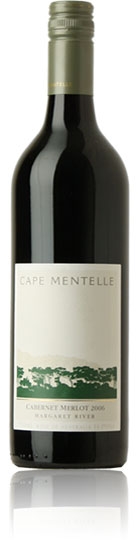
Cape Mentelle Cabernet Merlot 2010

I bought Cape Mentelle on the strong recommendation of various employees of various wine shops and have now tried it on a couple of occasions. I rather like Aussie wines at this price point (£12-15) as they often have great character and are readily accessible, meaning they're a good one to use to introduce a friend/group to wine tasting. With strong flavours that are often comparatively easy to identify along with some occasional subtleties, they nearly always go down well in a blind tasting.

Cape Mentelle is made in Margaret River, in Western Australia. A cool climate, Margaret River is often regarded as one of the top Aussie wine-producing regions, especially for its Cabernet Sauvignons. In due course I will be trying Moss Wood's Cab Sauv, described by Jancis Robinson as 'The Latour of the Margaret River' so I will hopefully be able to build you a picture of the region over the coming weeks or months.

Nose: Immediately obvious are tobacco, cedarwood and some smoke. So far, a very classic Cab Sauv blend. There's fruit at the back of the nose and a hint of pepper. Here's the reason I like these sort of wines as an introduction - plenty of interesting smells that can easily be identified. So far, so good.

Palate: Ah, it's clear we're in Australia now. Lots of rich red fruit hits the palate immediately, with cassis leading the way with some seriously jammy oomph. There is, however, an interesting twist, as the palate suddenly turns dry, with some decent spice and bitterness (coffee, perhaps dark chocolate) coming up to claim the fore. As it develops, the cedar from the nose comes through, clearing off the palate nicely. There's a certain level of astringency to this, but I feel sure that this will fade with some time out of the bottle. Quite a 1-2-3 structure in that the constituent parts are very separate, but this is by no means an unpleasant wine. Eminently drinkable and a crowd pleaser.

Body: I'm sure you can guess from the above that this could only go into the 'full-bodied beast' category, with some serious tannic power to back it up. I wonder if it might be worth leaving it for a year or 3?

Finish: Medium length, fairly basic, but pleasant nonetheless. Nothing worthy of note.

Conclusion: As I noted in the introduction, I'm a fan of this sort of wine. It has good, strong flavours and has clearly been made with a clear purpose in mind. No smoke and mirrors or attempts to beat Bordeaux here, it's Aussie Cab Sauv at its simple best, and it's happy to be it.

Points: 86. At the price, well worth a pop. Interesting enough for a tasting, but would match well with any red meat, ideally a suitably red cut of beef. Yum.

Sunday, 27 January 2013

Highland Park 12 Year Old Whisky

Time for a brief hiatus from wine. Having written some fairly lengthy posts about wine, it's time for a brief chat about whisky, inspired by re-reading and writing up my notes about Ataraxia Chardonnay 2009.

Funnily enough, Highland Park 12 was my first ever review of an alcoholic drink. I did it on the thoroughly excellent www.connosr.com, which is a real haven for whisky drinkers and reviewers and well worth a visit. 

As this was my first review, structure is a little haywire, but here it is: 

This is a gorgeous malt - it's a perfectly balanced study in the whisky-producing regions of Scotland. Whilst I seem to have found the nose rather lighter than my fellow reviewers, this whisky is absolutely bursting with flavour!
From the moment I sipped it there was a blast of honey rushing through my mouth with a perfect little dash of firey peat coming through afterwards to 'crisp off' the taste. As it moves on there's a touch of salt creeping in - I'm instantly reminded of the heather-covered hills of the Shetlands and the ever-present menace of the high seas. Wow. Whisky-inspired nostalgia!
Others have criticised the finish as brief: I must have had a fantastic bottle as my experience is completely the opposite. The distinctive honey-salt taste lingers at the back of my mouth for some time and fades gently away in a perfectly charming way.
HP12 is, to me, like a masterful piece of furniture - everything has smooth, rounded edges and the flavours are perfectly balanced and married together with consummate style. There's a feeling of 'shininess' that's present from the very first sniff and sip. The honey-salt-peat combination is absolutely perfect. I've been looking for a premium(ish) bottle to buy and if HP 12 is this good, the 18 is coming up next!
I always read these reviews before buying a bottle to see if I think it'll suit my palate, so I thought I'd quickly list a couple of other bottles I'd associate this with. In short, I'd put it as a mix between Bowmore Legend (incidentally I prefer Legend to 12) and Dalwhinnie 15. It's like the best of both worlds. Glorious! 
Points: A slightly inflated 90, due to the excellent pricing of the whisky (£24-30).

  • Nose20
  • Taste23
  • Finish22
  • Balance: 25

Ataraxia Chardonnay 2009

Chardonnay is a much-maligned grape in my view. What particularly peeves me is when someone declares that they are an 'ABC' man or woman. What, I ask, does that mean? Oh, comes the glib response, it means 'anything but Chardonnay'. In order to emphasise a point one day I bought an extremely nice bottle of Meursault (I'll review it one day) to a well-known ABC acquaintance, who proceeded to wax lyrical about the wine's plump stone fruit, smooth edges and excellent zing of minerality. Needless to say, they were most distressed to find that they had been drinking Chardonnay - confirming my view that ABCers are only against Chardonnay because someone else told them to be, rather than based on their own experience.

Anecdotes aside, I have been trying a series of more accessibly-priced Chardonnay from around the world and I stumbled across Ataraxia in September. Ataraxia means tranquillity - a freedom from preoccupation (rather suitable, as it freed several ABCers from their preoccupation with saying ABC). Before I am accused of being intelligent enough to speak Greek, this is helpfully provided on the back of the bottle!

Kevin Friend, the winemaker at Ataraxia (who also have a Sauvignon Blanc and a red, which I can't remember) has made a conscious effort to make Ataraxia a Burgundian-style Chardonnay and has been greatly praised for his excellent work at Hamilton Russell, a particularly fantastic South African vineyard. So, onwards we proceed:

Colour: I tend to think that the colour of the wine is more relevant for whites than reds, as there are only so many ways of saying 'ruby' or 'garnet'. This is a rather appealing rich straw colour, continuing all the way to the edges.

Nose:
There is a significant amount of vanilla, confirming the presence of oak (on research, they use 34% new oak and 66% old oak barrels). Along with the vanilla there's a lovely dollop of honey and an almost caramelised smell - perhaps maple syrup? This is a buttery, soft, smooth nose and yet has some real power behind it. Rather strangely there is a slight almost imperceptible hint of chocolate and perhaps some salt as well. I must see if I can confirm that over some more bottles.

Palate: The best bit. After a stellar nose we get everything a person could want with a top Chardonnay: punchy stone fruit is immediately present, smoothed off with vanilla and honey. Indeed, in time the honey becomes even more distinct and the wine becomes exceptionally smooth - almost like drinking a good bit of Highland whisky*. This is really full of flavour and cleans itself off with a dash of minerality and lemon at the end. Accomplished stuff here and clearly marking itself against Burgundy's finest.

Body: This is a heavy and 'thick' Chardonnay. Whilst tasting like some of Burgundy's charmers, it definitely has New World 'oomph'. It's full-bodied with high alcohol but retains its exceptional smoothness.

Finish: Medium to long on the finish. It develops a little, but the majority of the finish comes from a gradual receding of the flavours with yet more honey-vanilla sweetness.

Conclusion: Really really interesting wine. One to try next to a top minerally Burgundy (I think it would be great to try next to a Meursault, but remember that you get what you pay for with Meursault, and should really be aiming for £30+, although Labouré-Roi is an acceptable alternative at £20 or so from Waitrose). It ticks every box and has no unpleasantness about it. Having read my notes through a couple of times, I have now decided to buy a case, as this will certainly improve for several years in the cellar.

Points: 93. At £20 a bottle with excellent cellaring potential, what are you waiting for?

*As a side note on whisky, Highland Park 12 is my 'basic expression' tipple of choice. Lovely honey and vanilla aromas that are reminiscent of this! Extremely smooth. In fact, I shall post a review of that next.

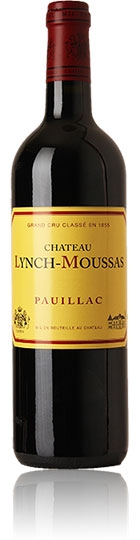
Château Lynch-Moussas, Pauillac, 2006

Back to a more 'classic' wine for this one. Tasted at a mini-Bordeaux tasting that covered Pauillac, Margaux and St Emillion, Lynch-Moussas was well regarded by fellow reviewers, but has been denigrated elsewhere, so was of interest to me. Costing £26, it's hardly a bargain-basement wine, but it's reasonably priced in comparison with many of its compatriots.

I have always liked Bordeaux wines that are more subtle, smooth and structured, as I feel that the New World often does the fruity wines better than France does. This is very much Bordeaux's forté and as such, I rarely buy a Bordeaux when looking for power - I look for finesse, and this wine will be judged by that criterion.
Nose: A nice array of aromas coming through here. Not all are instantly identifiable, but they remain there long enough to be found by a trial and error process. There's vanilla and spice immediately with a hint of perfumed flowers - we thought lilac, but weren't quite sure. Behind the floral aromas there was a touch of woodsmoke and a light hint of strawberry (or perhaps very diluted cassis). A fairly typical Pauillac then, although with an almost Margaux-like perfume.

Palate: Rather lovely, but became less so after a few sips as a touch of astringency came into it. Cherry and red fruits are present and it's extremely smooth although a hint of acidity and spice came into affairs after a short time. It began to change into a sweet and sour taste of raspberry - again, I was unable to find much cassis, which I had expected would be much more prominent, which struck me as a touch odd. That lilac taste came flitting in and out and had one reviewer convinced he was drinking a Margaux. Funnily, on a re-taste an hour or two afterwards, this became a much smoother and more characterful wine. Whilst there still wasn't cassis as such, the fruit was more pronounced, softer and more interesting. Would be lovely with all kinds of food and it seems a well-structured wine.

Body: Medium-bodied, medium alcohol and fairly low tannins and became perhaps a touch thin after drinking a (very small) glass of it.

Finish: A fairly classic finish in that it softens almost imperceptibly but has a reasonable level of development as a dash of fruit makes a late resurgence to remind you to take another sip.

Conclusion: Lynch-Moussas is a reasonably sophisticated wine with an interesting array of aromas (especially the floral ones). Well-balanced and smooth, but without a great deal to really excite, I think this would be excellent with classic roasts. Mint-crusted lamb would suit it ideally. 

Points: 86-87. Nice level of sophistication, but not quite enough to get into the serious points. Drinking now and unlikely to improve in the bottle, is it really worth £26?