Showing posts with label 2010. Show all posts

Tuesday, 7 May 2013

Moss Wood Chardonnay 2010

First things first. Apologies for the hideous gap between posts. I got rather caught up in other things and couldn't find time to drink wine, let alone review it! Right, enough of that. Wine:

I'm a fan of Moss Wood. I've reviewed their Pinot Noir here and gave it a high rating 89/90, praising its complexity and the interest it garners among drinkers. Having enjoyed it so much, I thought I'd give their Chardonnay a go - which also went in tune with my Chardonnay renaissance. I've read all sorts of lovely things about Moss Wood's Chardonnay but, being difficult and obstinate, I don't particularly like to take other people's opinions into account when I taste wine. As a result, my tastings often go against the consensus of what tastes like what.

This brings me onto an interesting point that I always remind people of before they taste wine - everything is subjective when it comes to wine. We all have our preferences and styles that we like more than others and its human nature to put an unconscious bias on things we like. This is why I taste things blind (especially given I have a slight conflict of interest here as Moss Wood sent me a very nice email complimenting me on my review of their Pinot Noir). Fortunately this was tasted blind, so the awful flattery that is about to follow is entirely sincere as it could have related to another Australian Chardonnay that I was trying that day (and I have witnesses to prove it!)

Nose: An opulent, heavy, rich Chardonnay nose. There's plenty of oak, but it is suitably restrained and doesn't dominate. This is a really full wine - there's honey, vanilla and a great big dollop of butterscotch. Citrus is fairly restrained on the nose and as a result this is a sweeter and rounder wine than some Chardonnays and eschews the sharp acidic nose that can condemn some bottles (cheap Burgundy being the prime offender here). Super buttery and almondy.

Palate: Again with the butterscotch but in comes some lemon to give a citrus zip to the affair. Vanilla is present and there's an interesting contrast of sweet and sour flavours - they're in perfect harmony and magnificently balanced. In terms of flavour this is a very full wine (as the nose would suggest) and shows that so-called 'Imperial Wine' (to be laid down... and forgotten about) now offers some serious style and ferociously good wine-making. Regardless of the great flavours in here, one word describes this best: balance. I was considering a ballerina in mid-pirouette analogy here but then calmed down a little and left it out.

Body: Acidity comes in at the back, courtesy of the lemon, and forcefully pushes this wine on and on! It's full-bodied and has high alcohol (not that it affects the wine).

Finish: Goes on and on and on and on. Extremely long and with a charming little progression: the sweet and sour contrast is played out in miniature with butter, citrus, honey, citrus coming along in turn and each fighting for their spot in the limelight. A real highlight to an excellent sip.

Conclusion: Is there really much more to say? A different wine to Ataraxia  (click on it for a review) in that Ataraxia was consciously focused on becoming Burgundian while Moss Wood is revelling in its modern intensity, but as good an example of Chardonnay's values as you'll find. It would be brilliant to try the two next to one another and, as they're both around £20 a bottle, what's stopping you?! Not sure on cellaring potential but I suspect a few years might improve things further still - perhaps someone could enlighten me here?

Points: 90+. Accomplished stuff.

Saturday, 13 April 2013

Au Bon Climat Santa Barbara County Chardonnay 2010

So, back to Santa Barbara County for an ABC Chardonnay. Much to my amusement, Au Bon Climat is regularly referred to as 'ABC' - ABC also being the acronym for those who drink 'anything but Chardonnay' (read my review of the magnificent Ataraxia Chardonnay for further discussion). I was mildly interested to see how I would enjoy this wine as I have had a very mixed bag of US Chardonnays in the past (Frog's Leap was lovely but heinously overpriced and there are many hideously watery, acidic and plain bottles out there).

So, clocking in at around £22 (£18 if on offer), I thought ABC would be worth a punt and an interesting option. I also rather like the bottle.

Nose: Very classic oaked Chardonnay - vanilla, honey and oak in abundance with an intriguing hint of lavender and apricot. Quite fresh with some apple and perhaps orange (?) coming through but at the same time delightfully 'creamy'.

Palate: Wow. There is a quite enormous palate of vanilla and honey. This is a real mouth-filler with apricot and lemon coming in in the middle and battling it out.There's also something a bit buttery about this fellow - perhaps a slight crunch of shortbread in there - with just a touch of salt. I wouldn't go so far as to say this is balanced, but there's a certain focus to the intensity. It's forceful, big and brash but at the same time curiously captivating in its slight subtleties.

Body: Full - but strangely it mellows off remarkably well and is (contrary to the description above) extremely moreish and drinkable.

Finish: Strong and long. It develops well and finishes with a rather interesting spot of peppery lemon and a good zing of acidity. Crumbs, this finish goes on and on. This is a really top-quality effort.

Conclusion: Not sure if the sheer honey/vanilla power of this will appease or irritate people who dislike Chardonnay. In one way it's quite enjoyable, but in the other it typifies the extreme nature of modern Chardonnays - they can be insipid and watery or they can be a blast of oak. Needless to say, this wine divided opinion at the tasting and it's quite easy to see why. I, however, like it. It mellows very nicely (once you get over the sheer quantity of honey and vanilla) and has a seemingly endless finish.

Points: 88. Would certainly drink it again - which is good as I have some in the cellar!

Friday, 29 March 2013

Sula Dindori Shiraz Reserve 2010

So here's something a little bit different. Sula, the Indian vineyard that boldly claims to be 'at the forefront of the Indian Wine revolution', was founded by Rajeev Samant in 1993 after leaving his job as an engineer in Silicon Valley. Dindori Reserve was launched in 2005 and shows the experimental edge and growing flair of Sula. Aged in new oak for 1 year.

While the phrase 'Indian Wine revolution' may seem a little vainglorious, I thought it would be an interesting wine to try. I had been recommended to try Indian wine before, but I was cautious as to how well it would travel. Given the distinctly different climates of England and  India I felt its merits may be lost (especially as I tried it in mid-Winter - which was actually a rather good thing, as you will see from the notes below).

Along with experimenting across established Indian varietals, Sula also produces a dessert wine (India's first), a Sauvignon Blanc and a Chenin Blanc (also firsts for India). While I suppose this could be termed a revolution in that it has never been done before in India, the fact that these are 'firsts' for India suggests to me that this is a revolution very much in its infancy. Still, with some fairly slick marketing projects, including luxury accommodation on the vineyard, Sula may well end up being as successful as its marketing suggests. They definitely need to change the labels though...

Colour: A rather opaque, cloudy red. A hint of purple.

Nose: Peppery, spicy (cinnamon) and jammy. All characteristic Shiraz tastes. Now comes the interesting part - salt and smoke combined with distinct notes of dried black tea. For those of you familiar with Lapsang Souchong tea, this is a remarkably comparable nose! My notes say in capitals 'TEA'! How interesting.

Palate: Really really smoky fruit. Plenty of oak. Molasses and cinnamon (perhaps burnt cinnamon?) come in with some spice in the middle, giving it a rather charmingly sweet toasty flavour. Lapsang comes through again in serious quantities. Interesting. Quite heavy but not oppressive.

Body: Quite acidic and reasonable tannic. Quite austere on the back. Reasonably smooth.

Finish: The austerity really punches in here. Again, I can't help but make comparisons with slightly over-brewed Lapsang tea. Very smoky, drying and slightly sweet. Not wholly unpleasant.

Conclusion: Classifying a wine like this is extraordinarily difficult (much to my amusement I originally typed 'tea' here - reflecting just how tea-like it was!). It's hard to tell if its well-made or hideously unbalanced. The smokiness is something I quite like (for a glass or two) but I think those of you who have more refined palates may find it oppressive. I liked the sweet spiciness in the middle of the palate but was rather less fond of the austere ending, which is rather too dry for my liking.

Points: 84. Give it a go. It's an extremely interesting wine and is a great conversation-starter, especially given its provenance. Balance is an issue, but perhaps that's what makes it exciting.

Thursday, 21 February 2013

Karasi Zorah, Areni Noir 2010

Time for something a little more exotic and off the beaten path. Karasi Zorah is an Armenian wine grown a 1,400m altitude and is comprised of a grape called Areni Noir - which I am told is the signature grape variety of Armenia. Karasi Zorah has been well-reviewed by some top names in wine: Jancis Robinson gave it 17 and memorably described it as having 'gypsy' flavours - meaning it in a positive sense, suggesting an 'untamed' and wild edge. With such a review, I had to give it a go. On a side note, the bottle is also very pretty: made in a classic style with a wider shoulder than base, the label has raised colouring and the design is a nice touch of traditional Armenian art (although the wine itself was made by an Italian - Alberto Antonini).

Tried alongside several other wines from non-mainstream producers (but by no means non-traditional, as Armenia has been making wine for thousands of years), Zorah was a strong contender. Aged in oak and made in traditional amphorae, it certainly has character galore!

Nose: On first sniff it smelt almost exactly like a Cuban cigar, with notes of smoke and hay backed with a lovely heady mix of raisins, spice and coffee. A hint of pepper comes through at the back and complements the coffee nicely. There's a very distinct structure and on first impression it is extremely well-made.

Palate: How odd! I found it to be very similar to actually smoking a cigar with all the hay, smoke and spice that entails. The savoury tastes are backed with nice ripe fruit although there's a slight sharpness at times. Impressive pepper and coffee. In time, it became sweeter at the front end of things - perhaps a hint of blood orange - and heavier and more sour at the back, with the coffee coming to dominate.

Body: Quite a full taste, but strangely a relatively thin body. Perhaps I didn't give it enough time, but the body doesn't feel quite balanced. Definitely something a little strange about it.

Finish: Medium length with a nice little development. There's a bit of orange zest in the finish - with the bitterness associated with eating some peel.

Conclusion: A really rather interesting and fun wine. The bottle is very distinctive and, depending on your style, it's either a fun design point or an unnecessarily heavy gimmick. At £20 a bottle it's not exactly a cheap wine, but then it does come up with the goods in many areas. The imbalance in the body may have been from my bottle, so it will certainly be one that I re-taste (when I can find another supplier in the UK, as it's rather hard to get hold of). I thoroughly enjoyed the smokiness and spiciness which also seems characteristic of Armenia in its wildness and makes one think of mountain scenes in small villages (the vineyard is near Mt Ararat - where Noah's Ark finished its journey).

Points: 88-89. The slight weirdness with the body has removed a point or two from this, but I would have no hesitation in recommending this to someone who is interested in wine and would like to try something different.

Monday, 28 January 2013

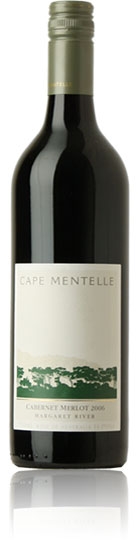
Cape Mentelle Cabernet Merlot 2010

I bought Cape Mentelle on the strong recommendation of various employees of various wine shops and have now tried it on a couple of occasions. I rather like Aussie wines at this price point (£12-15) as they often have great character and are readily accessible, meaning they're a good one to use to introduce a friend/group to wine tasting. With strong flavours that are often comparatively easy to identify along with some occasional subtleties, they nearly always go down well in a blind tasting.

Cape Mentelle is made in Margaret River, in Western Australia. A cool climate, Margaret River is often regarded as one of the top Aussie wine-producing regions, especially for its Cabernet Sauvignons. In due course I will be trying Moss Wood's Cab Sauv, described by Jancis Robinson as 'The Latour of the Margaret River' so I will hopefully be able to build you a picture of the region over the coming weeks or months.

Nose: Immediately obvious are tobacco, cedarwood and some smoke. So far, a very classic Cab Sauv blend. There's fruit at the back of the nose and a hint of pepper. Here's the reason I like these sort of wines as an introduction - plenty of interesting smells that can easily be identified. So far, so good.

Palate: Ah, it's clear we're in Australia now. Lots of rich red fruit hits the palate immediately, with cassis leading the way with some seriously jammy oomph. There is, however, an interesting twist, as the palate suddenly turns dry, with some decent spice and bitterness (coffee, perhaps dark chocolate) coming up to claim the fore. As it develops, the cedar from the nose comes through, clearing off the palate nicely. There's a certain level of astringency to this, but I feel sure that this will fade with some time out of the bottle. Quite a 1-2-3 structure in that the constituent parts are very separate, but this is by no means an unpleasant wine. Eminently drinkable and a crowd pleaser.

Body: I'm sure you can guess from the above that this could only go into the 'full-bodied beast' category, with some serious tannic power to back it up. I wonder if it might be worth leaving it for a year or 3?

Finish: Medium length, fairly basic, but pleasant nonetheless. Nothing worthy of note.

Conclusion: As I noted in the introduction, I'm a fan of this sort of wine. It has good, strong flavours and has clearly been made with a clear purpose in mind. No smoke and mirrors or attempts to beat Bordeaux here, it's Aussie Cab Sauv at its simple best, and it's happy to be it.

Points: 86. At the price, well worth a pop. Interesting enough for a tasting, but would match well with any red meat, ideally a suitably red cut of beef. Yum.