Regular readers will know my interest in South African wines seems never-ending and that I am fortunate enough to have a good supplier nearby, so I have an almost limitless stock of the things. I gave Warwick a go based on positive comments by various distinguished boozers (the boozerati, perhaps?) and on favourable reviews by characters such as John Platter who, love him or hate him, is seen by many as the Parker of South Africa. His list of the Top 100 South African wines consistently dominates the marketing of SA wine - although people often criticise it for only plumping for already-established wines, leaving smaller vineyards largely to themselves.
Another, more superficial reason for choosing Warwick Trilogy is that I rather like the name and the bottle shape. At £20-24 it's not overly expensive and something you can cheerfully share with some friends without worrying about the bank. Might do a post on how to run successful tastings/wine events sometime, as they're a rather good way of getting into wine.
Anyway - onto the wine. Decanted for 2 hours then re-tasted after 4.
Nose: Typical Bordeaux at first - pencil shavings, graphite and cedar with an almost earthy texture to the nose. Tobacco, pepper and dark chocolate coming in from time to time, with the chocolate starting to build its intensity. Dollop of cassis in there. Peculiarly it's a rather light nose, despite the strong-seeming flavours in there. Everything is quite soft and gentle and it took some teasing to get into it. The dark chocolate has developed into a hint of chili and has a bit of bite to it. On the re-taste the nose had become much more opulent and jammy, but there was still a hefty dose of pepper in there.
Palate: Largely as above, but without the pencil shavings. The coffee is more intense and the cassis is more noticeable, but not exactly prominent. On the re-taste it was noticeably jammier, but still suffered from the slightly harsh/sharp coffee and dark chocolate. I rather wish I'd been able to decant this for longer as I think it was going really exciting places.
Body: Remarkably it was medium-light. There's plenty of tannin but there's no mouth-coating blast sense to this and it's certainly not overpowering. Rather well poised I thought - a nice weight in harmony with the clear flavours. Nice and smooth (before the tannic hit).
Finish: Quite austere and drying. Not terribly long, either. Not unpleasant, but not exactly one to write home about.
Conclusion: A nice wine, but perhaps unremarkable in some respects? I like the chocolatey-ness (almost like eating cocoa nibs - the intensity and sharpness was very interesting) but at the same time I was hoping for just a touch more fruit. I mentioned my regret that I didn't leave this out for longer, and I suspect I would have been rewarded if I had. Essentially, it tastes rather like classic claret but a little bit more accessible (especially at this age). Definitely worth a try purely to see if the construction is something you like or don't. I will try it again one day.
Points: 85/6 (note to new readers - I prefer to use a slightly broader scale than the traditional 85-100 used by most 100 point markers. By way of explanation, 85/6 is a perfectly respectable wine. Not one I would rush to put in my cellar, but one I would happily buy and drink again.)
A collection of blind-tasted wine reviews which I hope will provide a helpful (and possibly interesting!) guide to choosing, buying, rating and tasting wine. All comments, criticism, discussion and thoughts are welcome!
Showing posts with label cassis. Show all posts
Tuesday, 13 August 2013
Warwick Estate, Trilogy, 2009
Labels:
2008,
86,
austere,
cabernet franc,
cabernet sauvignon,
cassis,
coffee,
dark chocolate,
jammy,
John Platter,
merlot,
pencil shavings,
red,
sharp,
South Africa,
Top 100 Wines,
Trilogy,
Warwick
Saturday, 23 March 2013
Château Talbot, St Julien, 2001
As I tend to focus on New World wines, I felt it was time to go back to a classic Bordeaux. Squashed between Pauillac and Margaux on the Left Bank, St Julien is known for producing consistently good and interesting wines. Château Talbot is a 5th Cru Classé and is produced in a very classic style. Some might say that it was designed for the Englishman as it ticks all the boxes for classic claret - the most important being that it is balanced and smooth.
A brief disclaimer is that I tasted this wine some time ago and so my notes are less complete and my memory less distinct. It was also tasted with food and not tasted blind, so I would suggest that this is probably a less objective tasting note than I normally give.
Colour: A fairly deep purple/red, but there was a slight tendency towards tawny on the edges.
Nose: Cedar is the dominant note, backed by tobacco and a dollop of blackberry. Rather less fruit than I had expected, but by no means absent.
Palate: The reverse of the above! The blackberries came first and in a decent enough level of intensity. These were followed by the tobacco with the cedar coming in at the end to clear the palate. This isn't hugely complex - it's simple and light - but it is very nicely balanced and extremely smooth. Very much an easy-drinker.
Body: Extremely soft and gentle. Very light on the body, but with a decent level of taste. It isn't insipid or dreary. Very balanced, with a hint of astringency to firm it up a bit.
Finish: A medium length which fades nicely but without great complexity. Could have done with a bit more of a finish, I feel.
Conclusion: This is exactly the sort of wine that is really difficult to grade. Its soft and subtle flavours mean that many will find it inaccessible or boring, especially if they were to drink it next to a fruit bomb. This strikes me as the sort of wine that is absolutely ideal for a relaxing evening with a book in front of a fire. It was excellent with food, but can it really become a talking point? Its very merits lie in the fact that it is balanced, light and smooth - not exactly 'Eureka' features. That being said, those who prefer a milder wine will adore this as the one thing it does have in spades is class.
Points: 88
A brief disclaimer is that I tasted this wine some time ago and so my notes are less complete and my memory less distinct. It was also tasted with food and not tasted blind, so I would suggest that this is probably a less objective tasting note than I normally give.
Colour: A fairly deep purple/red, but there was a slight tendency towards tawny on the edges.
Nose: Cedar is the dominant note, backed by tobacco and a dollop of blackberry. Rather less fruit than I had expected, but by no means absent.
Palate: The reverse of the above! The blackberries came first and in a decent enough level of intensity. These were followed by the tobacco with the cedar coming in at the end to clear the palate. This isn't hugely complex - it's simple and light - but it is very nicely balanced and extremely smooth. Very much an easy-drinker.
Body: Extremely soft and gentle. Very light on the body, but with a decent level of taste. It isn't insipid or dreary. Very balanced, with a hint of astringency to firm it up a bit.
Finish: A medium length which fades nicely but without great complexity. Could have done with a bit more of a finish, I feel.
Conclusion: This is exactly the sort of wine that is really difficult to grade. Its soft and subtle flavours mean that many will find it inaccessible or boring, especially if they were to drink it next to a fruit bomb. This strikes me as the sort of wine that is absolutely ideal for a relaxing evening with a book in front of a fire. It was excellent with food, but can it really become a talking point? Its very merits lie in the fact that it is balanced, light and smooth - not exactly 'Eureka' features. That being said, those who prefer a milder wine will adore this as the one thing it does have in spades is class.
Points: 88
Labels:
2001,
blackberries,
Bordeaux,
cassis,
cedar,
chateau,
France,
red,
St Julien,
Talbot,
tobacco
Sunday, 24 February 2013
Morgenster 2004, Flagship Red
My new 'current favourite': whilst not actually called their 'flagship red', Morgenster 2004 is the second vintage of Morgenster Estate's flagship wine and is a classic example of South Africa's take on Bordeaux blends. With solid ageing potential, it is at the higher end of pricing but the 2004 is less costly (at around £30) than other vintages. Morgenster made it clear that they were not intending to make a 'showy' wine, but were rather looking for elegance, quality and balance.
While everyone loves a little bit of marketing and some gimmicks - after all, which winery isn't trying to make a supremely balanced and elegant Bordeaux-style red? - it's important to get through them. This is one of the advantages of tasting wines blind (I use some rather fun tasting sleeves which I shall post up in due course) as it allows the tasters to judge the wine itself, rather than the bottle, labelling, marketing and reputation. This was decanted for 2 hours before drinking and re-tasted at intervals of an hour.
Colour: Being reasonably old, the 2004 has begun to get a hint of tawny at the edges, although not enough for anyone to suggest that this was a seriously old wine.
Nose: Decent vanilla at first showing the oak coming through but then (surprisingly, given the age) a touch of green. Pepper, spices and red berries show the dominance of the Cabernet Sauvignon and there's a leathery edge to things. There's a good level of complexity in the nose and it's strong enough to allow most people to pick up the aromas whilst also showing off a good level of balance. The greenness faded after a further hour. Fruit began to emerge at the 2 hour mark and was more pronounced after 3 or 4 - which also saw the end of the savoury notes, which faded away to be replaced by a punchy dose of white pepper.
Palate: Somewhat muted on the first taste: a hint of vanilla and cedarwood with fruit tickling the back of the tongue. Slightly closed and grassy. After hour 3 this changed entirely. It was sweet and surprisingly light - a hint of astringency that faded away by the fourth hour - and the pepper and cedar remaining at the back end of things. There was a touch of earthiness. An extremely smooth-drinker that greatly impressed - perhaps the marketing isn't all rubbish? Elegance, balance and a distinctly Bordelais style. Nice.
Body: Thin at first, then opened up admirably after hour 3/4. Fairly high tannins and certainly a decent slog of alcohol in there.
Finish: Could be that of a top Bordeaux. All flavours in perfect symmetry with a clear direction and decent length. Supreme body and excellent balance.
Conclusion: Very nice wine - but it needed a LOT of decanting. I would have been hard-pressed to give it above 84 after the first two hours after decanting but it shot up to high 80s after 3 hours and touched 90 after that. If I were to serve it at a dinner I'd aim for serving it at the 3 hour mark, as its strength would be present for the early stages of the meal but then would soften off and become a much easier drinker as the evening progressed. One slightly sad point is that a search of Morgenster Estate's website comes up with 'account suspended' page. Whilst I hope this is only a technical problem, it may be worth buying a bottle or two while you still can.
Points: 90.
While everyone loves a little bit of marketing and some gimmicks - after all, which winery isn't trying to make a supremely balanced and elegant Bordeaux-style red? - it's important to get through them. This is one of the advantages of tasting wines blind (I use some rather fun tasting sleeves which I shall post up in due course) as it allows the tasters to judge the wine itself, rather than the bottle, labelling, marketing and reputation. This was decanted for 2 hours before drinking and re-tasted at intervals of an hour.
Colour: Being reasonably old, the 2004 has begun to get a hint of tawny at the edges, although not enough for anyone to suggest that this was a seriously old wine.
Nose: Decent vanilla at first showing the oak coming through but then (surprisingly, given the age) a touch of green. Pepper, spices and red berries show the dominance of the Cabernet Sauvignon and there's a leathery edge to things. There's a good level of complexity in the nose and it's strong enough to allow most people to pick up the aromas whilst also showing off a good level of balance. The greenness faded after a further hour. Fruit began to emerge at the 2 hour mark and was more pronounced after 3 or 4 - which also saw the end of the savoury notes, which faded away to be replaced by a punchy dose of white pepper.
Palate: Somewhat muted on the first taste: a hint of vanilla and cedarwood with fruit tickling the back of the tongue. Slightly closed and grassy. After hour 3 this changed entirely. It was sweet and surprisingly light - a hint of astringency that faded away by the fourth hour - and the pepper and cedar remaining at the back end of things. There was a touch of earthiness. An extremely smooth-drinker that greatly impressed - perhaps the marketing isn't all rubbish? Elegance, balance and a distinctly Bordelais style. Nice.
Body: Thin at first, then opened up admirably after hour 3/4. Fairly high tannins and certainly a decent slog of alcohol in there.
Finish: Could be that of a top Bordeaux. All flavours in perfect symmetry with a clear direction and decent length. Supreme body and excellent balance.
Conclusion: Very nice wine - but it needed a LOT of decanting. I would have been hard-pressed to give it above 84 after the first two hours after decanting but it shot up to high 80s after 3 hours and touched 90 after that. If I were to serve it at a dinner I'd aim for serving it at the 3 hour mark, as its strength would be present for the early stages of the meal but then would soften off and become a much easier drinker as the evening progressed. One slightly sad point is that a search of Morgenster Estate's website comes up with 'account suspended' page. Whilst I hope this is only a technical problem, it may be worth buying a bottle or two while you still can.
Points: 90.
Labels:
2004,
Bordeaux,
cabernet sauvignon,
cassis,
cedar,
leather,
oak,
pepper,
red,
South Africa,
spice,
Toastbongo,
vanilla
Monday, 28 January 2013
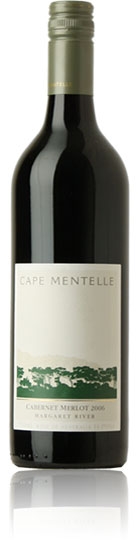
Cape Mentelle Cabernet Merlot 2010
I bought Cape Mentelle on the strong recommendation of various employees of various wine shops and have now tried it on a couple of occasions. I rather like Aussie wines at this price point (£12-15) as they often have great character and are readily accessible, meaning they're a good one to use to introduce a friend/group to wine tasting. With strong flavours that are often comparatively easy to identify along with some occasional subtleties, they nearly always go down well in a blind tasting.
Cape Mentelle is made in Margaret River, in Western Australia. A cool climate, Margaret River is often regarded as one of the top Aussie wine-producing regions, especially for its Cabernet Sauvignons. In due course I will be trying Moss Wood's Cab Sauv, described by Jancis Robinson as 'The Latour of the Margaret River' so I will hopefully be able to build you a picture of the region over the coming weeks or months.
Nose: Immediately obvious are tobacco, cedarwood and some smoke. So far, a very classic Cab Sauv blend. There's fruit at the back of the nose and a hint of pepper. Here's the reason I like these sort of wines as an introduction - plenty of interesting smells that can easily be identified. So far, so good.
Palate: Ah, it's clear we're in Australia now. Lots of rich red fruit hits the palate immediately, with cassis leading the way with some seriously jammy oomph. There is, however, an interesting twist, as the palate suddenly turns dry, with some decent spice and bitterness (coffee, perhaps dark chocolate) coming up to claim the fore. As it develops, the cedar from the nose comes through, clearing off the palate nicely. There's a certain level of astringency to this, but I feel sure that this will fade with some time out of the bottle. Quite a 1-2-3 structure in that the constituent parts are very separate, but this is by no means an unpleasant wine. Eminently drinkable and a crowd pleaser.
Body: I'm sure you can guess from the above that this could only go into the 'full-bodied beast' category, with some serious tannic power to back it up. I wonder if it might be worth leaving it for a year or 3?
Finish: Medium length, fairly basic, but pleasant nonetheless. Nothing worthy of note.
Conclusion: As I noted in the introduction, I'm a fan of this sort of wine. It has good, strong flavours and has clearly been made with a clear purpose in mind. No smoke and mirrors or attempts to beat Bordeaux here, it's Aussie Cab Sauv at its simple best, and it's happy to be it.
Points: 86. At the price, well worth a pop. Interesting enough for a tasting, but would match well with any red meat, ideally a suitably red cut of beef. Yum.
Cape Mentelle is made in Margaret River, in Western Australia. A cool climate, Margaret River is often regarded as one of the top Aussie wine-producing regions, especially for its Cabernet Sauvignons. In due course I will be trying Moss Wood's Cab Sauv, described by Jancis Robinson as 'The Latour of the Margaret River' so I will hopefully be able to build you a picture of the region over the coming weeks or months.
Nose: Immediately obvious are tobacco, cedarwood and some smoke. So far, a very classic Cab Sauv blend. There's fruit at the back of the nose and a hint of pepper. Here's the reason I like these sort of wines as an introduction - plenty of interesting smells that can easily be identified. So far, so good.
Palate: Ah, it's clear we're in Australia now. Lots of rich red fruit hits the palate immediately, with cassis leading the way with some seriously jammy oomph. There is, however, an interesting twist, as the palate suddenly turns dry, with some decent spice and bitterness (coffee, perhaps dark chocolate) coming up to claim the fore. As it develops, the cedar from the nose comes through, clearing off the palate nicely. There's a certain level of astringency to this, but I feel sure that this will fade with some time out of the bottle. Quite a 1-2-3 structure in that the constituent parts are very separate, but this is by no means an unpleasant wine. Eminently drinkable and a crowd pleaser.
Body: I'm sure you can guess from the above that this could only go into the 'full-bodied beast' category, with some serious tannic power to back it up. I wonder if it might be worth leaving it for a year or 3?
Finish: Medium length, fairly basic, but pleasant nonetheless. Nothing worthy of note.
Conclusion: As I noted in the introduction, I'm a fan of this sort of wine. It has good, strong flavours and has clearly been made with a clear purpose in mind. No smoke and mirrors or attempts to beat Bordeaux here, it's Aussie Cab Sauv at its simple best, and it's happy to be it.
Points: 86. At the price, well worth a pop. Interesting enough for a tasting, but would match well with any red meat, ideally a suitably red cut of beef. Yum.
Labels:
2010,
Australia,
cabernet sauvignon,
Cape Mentelle,
cassis,
cedar,
full,
Margaret River,
merlot,
pepper,
red,
smoke,
Toastbongo,
tobacco,
Wine
Subscribe to:
Posts (Atom)