Back to America for this one. First things first - I'm not a wild fan of the bottle design or the label but fortunately it was a present, so my design judgment wasn't a factor. I say "fortunately" because this wine turned out to be much better than it looked. Due to university days I had always dismissed Zinfandel as a grape that was used solely in the production of cheap rosé (hi there, Blossom Hill). To say I was underwhelmed would be a minor understatement... Again, fortunately for me, it wasn't a sentiment that lasted long.
Colour: A lovely clear, deep and pure purple.
Nose: Oodles of dark berries, oak and a hefty dollop of spice. Cinnamon and black cherry intensity with a certain light crispness on the top notes. Much nicer than the insipid rosé I associate it with!
Palate: This is really smooth and mouth-filling. It's busting with fruit and spice but somehow it seems light and clean. A bit of an enigma here. The spiciness lifts the fruit and makes this more than just a fruit-bomb (although it certainly doesn't hold back) while retaining a lovely freshness.
Body: Oomph. Full, but rounded, smooth and with absolutely no harshness - along with the extraordinary feeling that it's actually rather light. I can't work out if this is a hefty beast or a delicate flower. Decent slug of alcohol in there but not oppressive.
Finish: Finishes very mildly and fades with a gentle lingering hint of berries. Excellent balance and decent length here too. A finish this satisfying demands another sip!
Conclusion: What a lovely way to dispel my negative image of Zinfandel. Of course this could have ended up in a cave-man style - a blast of fruit with nothing else - but the balance and cleanness really made it stand out. Crisp and fruity, there's not a hint of mustiness in it. People think it'll last to 2014/15 but I'd say go for it now as it's going down a treat.
Points: 90. Good stuff!
A collection of blind-tasted wine reviews which I hope will provide a helpful (and possibly interesting!) guide to choosing, buying, rating and tasting wine. All comments, criticism, discussion and thoughts are welcome!
Showing posts with label oak. Show all posts
Sunday, 7 July 2013
Tuesday, 7 May 2013
Moss Wood Chardonnay 2010
First things first. Apologies for the hideous gap between posts. I got rather caught up in other things and couldn't find time to drink wine, let alone review it! Right, enough of that. Wine:
I'm a fan of Moss Wood. I've reviewed their Pinot Noir here and gave it a high rating 89/90, praising its complexity and the interest it garners among drinkers. Having enjoyed it so much, I thought I'd give their Chardonnay a go - which also went in tune with my Chardonnay renaissance. I've read all sorts of lovely things about Moss Wood's Chardonnay but, being difficult and obstinate, I don't particularly like to take other people's opinions into account when I taste wine. As a result, my tastings often go against the consensus of what tastes like what.
This brings me onto an interesting point that I always remind people of before they taste wine - everything is subjective when it comes to wine. We all have our preferences and styles that we like more than others and its human nature to put an unconscious bias on things we like. This is why I taste things blind (especially given I have a slight conflict of interest here as Moss Wood sent me a very nice email complimenting me on my review of their Pinot Noir). Fortunately this was tasted blind, so the awful flattery that is about to follow is entirely sincere as it could have related to another Australian Chardonnay that I was trying that day (and I have witnesses to prove it!)
Nose: An opulent, heavy, rich Chardonnay nose. There's plenty of oak, but it is suitably restrained and doesn't dominate. This is a really full wine - there's honey, vanilla and a great big dollop of butterscotch. Citrus is fairly restrained on the nose and as a result this is a sweeter and rounder wine than some Chardonnays and eschews the sharp acidic nose that can condemn some bottles (cheap Burgundy being the prime offender here). Super buttery and almondy.
Palate: Again with the butterscotch but in comes some lemon to give a citrus zip to the affair. Vanilla is present and there's an interesting contrast of sweet and sour flavours - they're in perfect harmony and magnificently balanced. In terms of flavour this is a very full wine (as the nose would suggest) and shows that so-called 'Imperial Wine' (to be laid down... and forgotten about) now offers some serious style and ferociously good wine-making. Regardless of the great flavours in here, one word describes this best: balance. I was considering a ballerina in mid-pirouette analogy here but then calmed down a little and left it out.
Body: Acidity comes in at the back, courtesy of the lemon, and forcefully pushes this wine on and on! It's full-bodied and has high alcohol (not that it affects the wine).
Finish: Goes on and on and on and on. Extremely long and with a charming little progression: the sweet and sour contrast is played out in miniature with butter, citrus, honey, citrus coming along in turn and each fighting for their spot in the limelight. A real highlight to an excellent sip.
Conclusion: Is there really much more to say? A different wine to Ataraxia (click on it for a review) in that Ataraxia was consciously focused on becoming Burgundian while Moss Wood is revelling in its modern intensity, but as good an example of Chardonnay's values as you'll find. It would be brilliant to try the two next to one another and, as they're both around £20 a bottle, what's stopping you?! Not sure on cellaring potential but I suspect a few years might improve things further still - perhaps someone could enlighten me here?
Points: 90+. Accomplished stuff.
Labels:
2010,
90+ points,
almond,
Ataraxia,
Australia,
butter,
butterscotch,
chardonnay,
finish,
honey,
lemon,
long,
Moss Wood,
oak,
opulent,
Pinot Noir,
rich,
sweet,
vanilla
Saturday, 13 April 2013
Au Bon Climat Santa Barbara County Chardonnay 2010
So, back to Santa Barbara County for an ABC Chardonnay. Much to my amusement, Au Bon Climat is regularly referred to as 'ABC' - ABC also being the acronym for those who drink 'anything but Chardonnay' (read my review of the magnificent Ataraxia Chardonnay for further discussion). I was mildly interested to see how I would enjoy this wine as I have had a very mixed bag of US Chardonnays in the past (Frog's Leap was lovely but heinously overpriced and there are many hideously watery, acidic and plain bottles out there).
So, clocking in at around £22 (£18 if on offer), I thought ABC would be worth a punt and an interesting option. I also rather like the bottle.
Nose: Very classic oaked Chardonnay - vanilla, honey and oak in abundance with an intriguing hint of lavender and apricot. Quite fresh with some apple and perhaps orange (?) coming through but at the same time delightfully 'creamy'.
Palate: Wow. There is a quite enormous palate of vanilla and honey. This is a real mouth-filler with apricot and lemon coming in in the middle and battling it out.There's also something a bit buttery about this fellow - perhaps a slight crunch of shortbread in there - with just a touch of salt. I wouldn't go so far as to say this is balanced, but there's a certain focus to the intensity. It's forceful, big and brash but at the same time curiously captivating in its slight subtleties.
Body: Full - but strangely it mellows off remarkably well and is (contrary to the description above) extremely moreish and drinkable.
Finish: Strong and long. It develops well and finishes with a rather interesting spot of peppery lemon and a good zing of acidity. Crumbs, this finish goes on and on. This is a really top-quality effort.
Conclusion: Not sure if the sheer honey/vanilla power of this will appease or irritate people who dislike Chardonnay. In one way it's quite enjoyable, but in the other it typifies the extreme nature of modern Chardonnays - they can be insipid and watery or they can be a blast of oak. Needless to say, this wine divided opinion at the tasting and it's quite easy to see why. I, however, like it. It mellows very nicely (once you get over the sheer quantity of honey and vanilla) and has a seemingly endless finish.
Points: 88. Would certainly drink it again - which is good as I have some in the cellar!
Labels:
2010,
88 points,
ABC,
America,
Au Bon Climat,
big,
chardonnay,
honey,
oak,
oaked,
santa barbara,
shortbread,
USA,
vanilla,
white
Friday, 29 March 2013
Sula Dindori Shiraz Reserve 2010
So here's something a little bit different. Sula, the Indian vineyard that boldly claims to be 'at the forefront of the Indian Wine revolution', was founded by Rajeev Samant in 1993 after leaving his job as an engineer in Silicon Valley. Dindori Reserve was launched in 2005 and shows the experimental edge and growing flair of Sula. Aged in new oak for 1 year.
While the phrase 'Indian Wine revolution' may seem a little vainglorious, I thought it would be an interesting wine to try. I had been recommended to try Indian wine before, but I was cautious as to how well it would travel. Given the distinctly different climates of England and India I felt its merits may be lost (especially as I tried it in mid-Winter - which was actually a rather good thing, as you will see from the notes below).
Along with experimenting across established Indian varietals, Sula also produces a dessert wine (India's first), a Sauvignon Blanc and a Chenin Blanc (also firsts for India). While I suppose this could be termed a revolution in that it has never been done before in India, the fact that these are 'firsts' for India suggests to me that this is a revolution very much in its infancy. Still, with some fairly slick marketing projects, including luxury accommodation on the vineyard, Sula may well end up being as successful as its marketing suggests. They definitely need to change the labels though...
Colour: A rather opaque, cloudy red. A hint of purple.
Nose: Peppery, spicy (cinnamon) and jammy. All characteristic Shiraz tastes. Now comes the interesting part - salt and smoke combined with distinct notes of dried black tea. For those of you familiar with Lapsang Souchong tea, this is a remarkably comparable nose! My notes say in capitals 'TEA'! How interesting.
Palate: Really really smoky fruit. Plenty of oak. Molasses and cinnamon (perhaps burnt cinnamon?) come in with some spice in the middle, giving it a rather charmingly sweet toasty flavour. Lapsang comes through again in serious quantities. Interesting. Quite heavy but not oppressive.
Body: Quite acidic and reasonable tannic. Quite austere on the back. Reasonably smooth.
Finish: The austerity really punches in here. Again, I can't help but make comparisons with slightly over-brewed Lapsang tea. Very smoky, drying and slightly sweet. Not wholly unpleasant.
Conclusion: Classifying a wine like this is extraordinarily difficult (much to my amusement I originally typed 'tea' here - reflecting just how tea-like it was!). It's hard to tell if its well-made or hideously unbalanced. The smokiness is something I quite like (for a glass or two) but I think those of you who have more refined palates may find it oppressive. I liked the sweet spiciness in the middle of the palate but was rather less fond of the austere ending, which is rather too dry for my liking.
Points: 84. Give it a go. It's an extremely interesting wine and is a great conversation-starter, especially given its provenance. Balance is an issue, but perhaps that's what makes it exciting.
Labels:
2010,
cinnamon,
dindori,
fruit,
India,
Indian wine,
jammy,
lapsang souchong,
molasses,
oak,
red,
reserve,
shiraz,
spice,
sula,
tea
Sunday, 24 February 2013
Morgenster 2004, Flagship Red
My new 'current favourite': whilst not actually called their 'flagship red', Morgenster 2004 is the second vintage of Morgenster Estate's flagship wine and is a classic example of South Africa's take on Bordeaux blends. With solid ageing potential, it is at the higher end of pricing but the 2004 is less costly (at around £30) than other vintages. Morgenster made it clear that they were not intending to make a 'showy' wine, but were rather looking for elegance, quality and balance.
While everyone loves a little bit of marketing and some gimmicks - after all, which winery isn't trying to make a supremely balanced and elegant Bordeaux-style red? - it's important to get through them. This is one of the advantages of tasting wines blind (I use some rather fun tasting sleeves which I shall post up in due course) as it allows the tasters to judge the wine itself, rather than the bottle, labelling, marketing and reputation. This was decanted for 2 hours before drinking and re-tasted at intervals of an hour.
Colour: Being reasonably old, the 2004 has begun to get a hint of tawny at the edges, although not enough for anyone to suggest that this was a seriously old wine.
Nose: Decent vanilla at first showing the oak coming through but then (surprisingly, given the age) a touch of green. Pepper, spices and red berries show the dominance of the Cabernet Sauvignon and there's a leathery edge to things. There's a good level of complexity in the nose and it's strong enough to allow most people to pick up the aromas whilst also showing off a good level of balance. The greenness faded after a further hour. Fruit began to emerge at the 2 hour mark and was more pronounced after 3 or 4 - which also saw the end of the savoury notes, which faded away to be replaced by a punchy dose of white pepper.
Palate: Somewhat muted on the first taste: a hint of vanilla and cedarwood with fruit tickling the back of the tongue. Slightly closed and grassy. After hour 3 this changed entirely. It was sweet and surprisingly light - a hint of astringency that faded away by the fourth hour - and the pepper and cedar remaining at the back end of things. There was a touch of earthiness. An extremely smooth-drinker that greatly impressed - perhaps the marketing isn't all rubbish? Elegance, balance and a distinctly Bordelais style. Nice.
Body: Thin at first, then opened up admirably after hour 3/4. Fairly high tannins and certainly a decent slog of alcohol in there.
Finish: Could be that of a top Bordeaux. All flavours in perfect symmetry with a clear direction and decent length. Supreme body and excellent balance.
Conclusion: Very nice wine - but it needed a LOT of decanting. I would have been hard-pressed to give it above 84 after the first two hours after decanting but it shot up to high 80s after 3 hours and touched 90 after that. If I were to serve it at a dinner I'd aim for serving it at the 3 hour mark, as its strength would be present for the early stages of the meal but then would soften off and become a much easier drinker as the evening progressed. One slightly sad point is that a search of Morgenster Estate's website comes up with 'account suspended' page. Whilst I hope this is only a technical problem, it may be worth buying a bottle or two while you still can.
Points: 90.
Labels:
2004,
Bordeaux,
cabernet sauvignon,
cassis,
cedar,
leather,
oak,
pepper,
red,
South Africa,
spice,
Toastbongo,
vanilla
Tuesday, 29 January 2013
Te Mata Cape Crest Sauvignon Black 2010
Whilst I was going through a bit of a Kiwi Sauv Blanc phase, notably covering Saint Clair Pioneer Block 3, I stumbled across the highly original concept of an oaked Sauvingnon Blanc. Being a fan of both oaked whites and Sauvignon Blanc, I thought this might be worth a go.
Te Mata's SB is barrel fermented with an addition of a touch of Sauvignon Gris and Semillon in order to give a bit of balance and introduce some more complementary flavours. The result, I am assured, is that this wine is not far off a mix of Bordeaux Blanc and Kiwi SB. Having rarely tried top Bordeaux Blanc I'm not qualified to comment on that, but it certainly was nice.
Colour: Funnily enough, despite the oaking, this was almost clear but with a slight tinge of green. So far, so Sauvignon Blanc.
Nose: Ah, well the similarity ended there. With aromas of peach, apricot, honey, vanilla and citrus, one might be forgiven for thinking that this smelled like a typical Chardonnay. The raciness of the citrus made a nice balance, effectively replacing the 'minerality' one might expect from a Chardonnay.
Palate: Stone fruit - peach and apricot again - backed by vanilla with a twinge of green apple and citrussy zestiness, reminding us that this is an oaked SB, not a Chardonnay. A nice dollop of honey to round things off. There's a smooth and creamy texture to this with a sweet but light hint of Spring to it (sorry for the utterly obtuse note there. Perhaps blossom might serve better?)
Body: This is as full-bodied a SB as anyone is likely to try with a smooth texture which ends a touch abruptly with a zing of sharp citrus and acidity.
Finish: Medium length, and finishes a little sour with an almost coffee-like sourness (the taste following a big swig of black filter coffee). Not entirely pleasant, but not wholly unpleasant either.
Conclusion: An interesting experiment that was put up against the more illustrious (or at the very least the more famous) Cloudy Bay Te Koko and which stood up well. In time it developed stronger flavours but was perhaps a little less balanced that one would have hoped and the finish let it down a little. That being said, an interesting wine and certainly one to try next to an unoaked SB (Saint Clair Pioneer Block 3 would give an almost comical contrast) and an oaked Chardonnay (you can't go wrong with Ataraxia).
Points: Hard to rate a wine like this. Tasty and interesting, but a touch unbalanced with a slightly disappointing finish, meaning I can't really give it more than 87. I'm tempted to go down to 86.
Labels:
apricot,
Cape Crest,
chardonnay,
citrus,
green apple,
honey,
Kiwi,
New Zealand,
oak,
oaked,
peach,
sauvignon blanc,
sauvignon gris,
semillon,
Te Mata,
vanilla,
white
Sunday, 27 January 2013
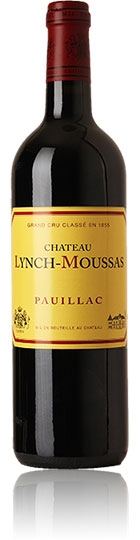
Château Lynch-Moussas, Pauillac, 2006
Back to a more 'classic' wine for this one. Tasted at a mini-Bordeaux tasting that covered Pauillac, Margaux and St Emillion, Lynch-Moussas was well regarded by fellow reviewers, but has been denigrated elsewhere, so was of interest to me. Costing £26, it's hardly a bargain-basement wine, but it's reasonably priced in comparison with many of its compatriots.
I have always liked Bordeaux wines that are more subtle, smooth and structured, as I feel that the New World often does the fruity wines better than France does. This is very much Bordeaux's forté and as such, I rarely buy a Bordeaux when looking for power - I look for finesse, and this wine will be judged by that criterion.
Nose: A nice array of aromas coming through here. Not all are instantly identifiable, but they remain there long enough to be found by a trial and error process. There's vanilla and spice immediately with a hint of perfumed flowers - we thought lilac, but weren't quite sure. Behind the floral aromas there was a touch of woodsmoke and a light hint of strawberry (or perhaps very diluted cassis). A fairly typical Pauillac then, although with an almost Margaux-like perfume.
Palate: Rather lovely, but became less so after a few sips as a touch of astringency came into it. Cherry and red fruits are present and it's extremely smooth although a hint of acidity and spice came into affairs after a short time. It began to change into a sweet and sour taste of raspberry - again, I was unable to find much cassis, which I had expected would be much more prominent, which struck me as a touch odd. That lilac taste came flitting in and out and had one reviewer convinced he was drinking a Margaux. Funnily, on a re-taste an hour or two afterwards, this became a much smoother and more characterful wine. Whilst there still wasn't cassis as such, the fruit was more pronounced, softer and more interesting. Would be lovely with all kinds of food and it seems a well-structured wine.
Body: Medium-bodied, medium alcohol and fairly low tannins and became perhaps a touch thin after drinking a (very small) glass of it.
Finish: A fairly classic finish in that it softens almost imperceptibly but has a reasonable level of development as a dash of fruit makes a late resurgence to remind you to take another sip.
Conclusion: Lynch-Moussas is a reasonably sophisticated wine with an interesting array of aromas (especially the floral ones). Well-balanced and smooth, but without a great deal to really excite, I think this would be excellent with classic roasts. Mint-crusted lamb would suit it ideally.
Points: 86-87. Nice level of sophistication, but not quite enough to get into the serious points. Drinking now and unlikely to improve in the bottle, is it really worth £26?
Labels:
Bordeaux,
cabernet sauvignon,
cherry,
floral,
France,
Lynch,
Lynch-Moussas,
merlot,
Moussas,
oak,
Pauillac,
raspberry,
red,
savoury,
Toastbongo,
Wine
Saturday, 12 January 2013
Jean-Louis Chavy Puligny-Montrachet 2010
Puligny-Montrachet is one of the most interesting and exciting of the Burgundian white wine regions, often clocking in with enormous price tags and subtlety, minerality and class to match them. This was my nod to 'classic' Chardonnay in my tasting set and while not at the sort of price point that is really needed to express the region, at £25 it was by no means a budget bottle of wine.
Montrachet is located in the Côte de Beaune subregion of Burgundy, just south of the incredibly famous town of Meursault (N.B. if you want to try Meursault, please resist the chance to buy a £15 bottle. It is one of those wines that you have to pay more for, sadly, but is often worth the extra pennies). If you get the chance it is a particularly nice part of the world to visit - Beaune containing some of Burgundy's most famous vinyards along with some exceptionally pretty towns.
Anyway, on to the wine. Tasted blind on the same evening as the Eikendal (and others), this was the most expensive wine of the evening (not that we knew as they were all wrapped!).
Nose: This can be said to characterise Burgundian Chardonnay - it was fresh, citrussy and acidic, but with an almost buttery balance to it. This was the first clue about the oak in this wine, which slightly damped the minerality but (in my view) gave the wine an interesting extra dimension.
Palate: As with the Eikendal this was perhaps a touch sugary but in time it improved greatly. Citrus came through and the palate began to 'fill out' with more flavours, including light vanilla from the oak. There is certainly minerality here and the fruit is in pleasant harmony with the other flavours.
Finish: The finish was perhaps a touch compact, but I have nothing negative to say about it. The wine simply faded away pleasantly and left no bitter after-taste or lingering acidity. It led easily into the next glass!
Conclusion: A very pleasant wine in terms of its harmony, but was it really worth £25? The oak played a part in making the balance of the wine, but as one of my co-tasters commented, it made it somewhat difficult to separate it from a fairly ordinary New World oaked Chardonnay. While I had failed to follow my own advice (steer clear of 'cheap' white Burgundy), I thought that this would be worth a go considering other positive reviews from elsewhere. As far as I'm concerned it was a wine that I would very much like to drink with friends over dinner, but £25 could be put to much better use elsewhere - even the traditionally heavily overpriced American wines did better (Au Bon Climat - to be reviewed shortly).
Points: It's hard to rate this one considering my knowledge of the price. When I tasted it blind I gave it a 7/10 - which I suppose equates to somewhere around 87 on the 100-point scale. Pleasant, but don't get too excited.
Labels:
Burgundy,
citrus,
France,
mineral,
minerality,
Montrachet,
oak,
oaked,
review,
Toastbongo,
white,
Wine
Eikendal Chardonnay 2010/11
I have recently decided that Chardonnay is a much-maligned grape and so have attempted to taste a broad range of Chardonnays from both the Old and New World. The latest in this set of tasting (the others will be posted at some point), was the South African Eikendal 2010/11, which cost around £12.
Eikendal Chardonnay is Eikendal's flagship white wine, according to their website, and is oaked for 7 months before bottling, so I was expecting a certain amount of intensity, although not so much as one might expect from an Aussie oak-monster of a Chardonnay. My thoughts at the time of tasting are as follows:
Nose: Surprisingly, given the oak, this was a light-smelling Chardonnay than many others I have tried. It was grassy and perhaps a little minerally with distinct notes of green apple and lemon coming through. After some time a hint of toasty oak began to emerge. The citrus was, however, the clearest of the identifiable aromas.
Palate: My first impression was 'smoky sweet'. It was pleasantly tasty with a decent level of stone fruit (peach, perhaps some apricot) with a little dollop of honey coming in at the back. After a few sips, however, it began to taste a little light and overly sugary. Perhaps even insipid. My standard tasting measure is around 50-75mls, so for a wine to become cloying after such a short period (admittedly without food) is not an entirely positive sign.
Body: The body remained remarkably light for an oaked Chardonnay throughout and altogether not what I was expecting. Perhaps there was too much focus on attempting to achieve a Burgundian minerality when making this wine and less was thought about how this would affect the wine's structure.
Finish: Longer that I would have thought given the lack of body and pleasant. More citrus, especially lemon, with a slightly grassy tang.
Conclusion: Clearly an ambitious attempt to make a Burgundian-style wine in South Africa, but did it really work? Well, it was a perfectly nice wine to begin with and showed some potential for development, but the slightly sugary taste meant that I was unable to say with certainty whether or not I liked it. I feel that with some well-chosen food matched with it (grilled fish or any white meat) or perhaps another year or so in the cellar this could have been a thoroughly decent wine.
Points: 84. Pleasant enough but there wasn't quite enough depth to make me want to drink this again. The citrus made me feel that this was in fact a Sauvignon Blanc in disguise.
Labels:
apricot,
Burgundy,
chardonnay,
honey,
lemon,
oak,
oaked,
peach,
South Africa,
Toastbongo,
white
Subscribe to:
Posts (Atom)


.jpg)