I came across Corvus Vivnium 2009 on a recent holiday and thought I'd give it a go. I've heard mildly positive things about it (nothing earth-shattering, but positive nonetheless) and it's always nice to unearth a lesser-known wine.
A rather smaller intro than usual on this as I didn't pick up any interesting facts or titbits about Corvus, other than that they are very much at the forefront of a growing interest in Turkish wine. Drunk at Locanda, by Kalkan, with an excellent calves' liver dish. The grape is called Karalahna.
Colour: A little cloudy - deep ruby red.
Nose: It was a touch cold to start with, so a fairly muted nose. In time sour cherry came through but the nose was rather astringent (if a nose can be astringent). It felt very drying. Hint of mint in the back and perhaps a touch of violet and pine sap - encouraging the slightly sharp scent. Leather in there too.
Palate: Regardless of whether a nose can be astringent, the palate most certainly is. A very dry wine with fairly prominent cherry and pepper. Whilst it softened in time, pepper and sour cherry dominate and it remains a dry wine. Not too sharp though.
Body: Med-full - quite hard to tell due to the astringency.
Finish: Simple, shortish and inoffensive.
Conclusion: Rather a nice table wine that went well with the rich and tangy calves liver I had. While it was a very dry wine, which is a style I'm less fond of, it had points of merit and was a perfectly enjoyable table wine for holiday.
Points: 83
A collection of blind-tasted wine reviews which I hope will provide a helpful (and possibly interesting!) guide to choosing, buying, rating and tasting wine. All comments, criticism, discussion and thoughts are welcome!
Showing posts with label cherry. Show all posts
Saturday, 19 October 2013
Corvus Vinium 2009
Labels:
2009,
83,
astringent,
cherry,
corvus,
dry,
kalkan,
karalanha,
locanda,
pepper,
turkey wine,
turkish wine,
vinium
Sunday, 7 July 2013
Turley Zindandel, Juvenile, 2007
Back to America for this one. First things first - I'm not a wild fan of the bottle design or the label but fortunately it was a present, so my design judgment wasn't a factor. I say "fortunately" because this wine turned out to be much better than it looked. Due to university days I had always dismissed Zinfandel as a grape that was used solely in the production of cheap rosé (hi there, Blossom Hill). To say I was underwhelmed would be a minor understatement... Again, fortunately for me, it wasn't a sentiment that lasted long.
Colour: A lovely clear, deep and pure purple.
Nose: Oodles of dark berries, oak and a hefty dollop of spice. Cinnamon and black cherry intensity with a certain light crispness on the top notes. Much nicer than the insipid rosé I associate it with!
Palate: This is really smooth and mouth-filling. It's busting with fruit and spice but somehow it seems light and clean. A bit of an enigma here. The spiciness lifts the fruit and makes this more than just a fruit-bomb (although it certainly doesn't hold back) while retaining a lovely freshness.
Body: Oomph. Full, but rounded, smooth and with absolutely no harshness - along with the extraordinary feeling that it's actually rather light. I can't work out if this is a hefty beast or a delicate flower. Decent slug of alcohol in there but not oppressive.
Finish: Finishes very mildly and fades with a gentle lingering hint of berries. Excellent balance and decent length here too. A finish this satisfying demands another sip!
Conclusion: What a lovely way to dispel my negative image of Zinfandel. Of course this could have ended up in a cave-man style - a blast of fruit with nothing else - but the balance and cleanness really made it stand out. Crisp and fruity, there's not a hint of mustiness in it. People think it'll last to 2014/15 but I'd say go for it now as it's going down a treat.
Points: 90. Good stuff!
Colour: A lovely clear, deep and pure purple.
Nose: Oodles of dark berries, oak and a hefty dollop of spice. Cinnamon and black cherry intensity with a certain light crispness on the top notes. Much nicer than the insipid rosé I associate it with!
Palate: This is really smooth and mouth-filling. It's busting with fruit and spice but somehow it seems light and clean. A bit of an enigma here. The spiciness lifts the fruit and makes this more than just a fruit-bomb (although it certainly doesn't hold back) while retaining a lovely freshness.
Body: Oomph. Full, but rounded, smooth and with absolutely no harshness - along with the extraordinary feeling that it's actually rather light. I can't work out if this is a hefty beast or a delicate flower. Decent slug of alcohol in there but not oppressive.
Finish: Finishes very mildly and fades with a gentle lingering hint of berries. Excellent balance and decent length here too. A finish this satisfying demands another sip!
Conclusion: What a lovely way to dispel my negative image of Zinfandel. Of course this could have ended up in a cave-man style - a blast of fruit with nothing else - but the balance and cleanness really made it stand out. Crisp and fruity, there's not a hint of mustiness in it. People think it'll last to 2014/15 but I'd say go for it now as it's going down a treat.
Points: 90. Good stuff!
Labels:
2007,
90+ points,
America,
California,
cherry,
cinnamon,
fruity,
oak,
Paso Robles,
red,
spice,
Turley,
USA,
Zinfandel
Friday, 1 February 2013
Peregrine Pinot Noir 2010, Central Otago
Nose: There's a slightly musty nose here. Perhaps a hint of mushroom or tobacco coming in to slightly overpower a hint of fresh cherry. Oddly enough, there's a touch of cedarwood and then some pepper near the end. This is a much more savoury Pinot Noir than I was expecting - on first impression I had this down as a Burgundy, and a good one at that.
Palate: I'm afraid to say it was rather bitter. There was none of the rich fruit backed by spice that I was expecting. There's cherry, but it tastes like unripe cherry - it's sharp and yet musty at the same time. Pepper is present throughout but there's an unpleasant chalkiness to the wine. While I have since read reviews saying this flavour was an example of good minerality, to me it wasn't minerality in the classic sense - it was chalky and mouth-drying, and added little to the wine. Perhaps if I'm being optimistic I might be able to find some raspberry, but I'm not entirely sure that I actually tasted it or if it was simply wishful thinking looking for something to like.
Body: Surprisingly for a Pinot Noir this felt remarkably tannic. The sharp furriness coming from the musty unripe cherry added to this sensation and made for a not very pleasant drink.
Finish: Almost no finish. This was extremely short and very one-dimensional.
Conclusion: When the cover was taken off I was deeply disappointed to find a wine so highly regarded had disappointed me so much. At £25, it's not cheap either. Perhaps I ought to have left it open for longer, but even after 2 hours I don't recall noting any positive changes. My only note from the later tasting is 'The nose is the only redeeming factor'. What a shame
Points: 70. Not a fan. I shall have to re-taste to confirm this opinion at some point, but when there are so many better Kiwi Pinot Noirs out there, why waste the time and money on this? The vastly superior Kota Lime Rock (which I will review in due course) blasted this out of the water for a perfect mix of savouriness and fruitiness.
Labels:
bitter,
Burgundy,
cherry,
Kiwi,
New Zealand,
Pinot Noir,
red,
savoury
Sunday, 27 January 2013
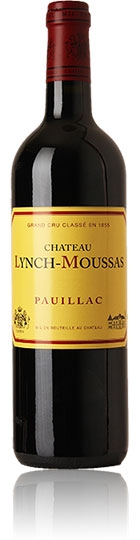
Château Lynch-Moussas, Pauillac, 2006
Back to a more 'classic' wine for this one. Tasted at a mini-Bordeaux tasting that covered Pauillac, Margaux and St Emillion, Lynch-Moussas was well regarded by fellow reviewers, but has been denigrated elsewhere, so was of interest to me. Costing £26, it's hardly a bargain-basement wine, but it's reasonably priced in comparison with many of its compatriots.
I have always liked Bordeaux wines that are more subtle, smooth and structured, as I feel that the New World often does the fruity wines better than France does. This is very much Bordeaux's forté and as such, I rarely buy a Bordeaux when looking for power - I look for finesse, and this wine will be judged by that criterion.
Nose: A nice array of aromas coming through here. Not all are instantly identifiable, but they remain there long enough to be found by a trial and error process. There's vanilla and spice immediately with a hint of perfumed flowers - we thought lilac, but weren't quite sure. Behind the floral aromas there was a touch of woodsmoke and a light hint of strawberry (or perhaps very diluted cassis). A fairly typical Pauillac then, although with an almost Margaux-like perfume.
Palate: Rather lovely, but became less so after a few sips as a touch of astringency came into it. Cherry and red fruits are present and it's extremely smooth although a hint of acidity and spice came into affairs after a short time. It began to change into a sweet and sour taste of raspberry - again, I was unable to find much cassis, which I had expected would be much more prominent, which struck me as a touch odd. That lilac taste came flitting in and out and had one reviewer convinced he was drinking a Margaux. Funnily, on a re-taste an hour or two afterwards, this became a much smoother and more characterful wine. Whilst there still wasn't cassis as such, the fruit was more pronounced, softer and more interesting. Would be lovely with all kinds of food and it seems a well-structured wine.
Body: Medium-bodied, medium alcohol and fairly low tannins and became perhaps a touch thin after drinking a (very small) glass of it.
Finish: A fairly classic finish in that it softens almost imperceptibly but has a reasonable level of development as a dash of fruit makes a late resurgence to remind you to take another sip.
Conclusion: Lynch-Moussas is a reasonably sophisticated wine with an interesting array of aromas (especially the floral ones). Well-balanced and smooth, but without a great deal to really excite, I think this would be excellent with classic roasts. Mint-crusted lamb would suit it ideally.
Points: 86-87. Nice level of sophistication, but not quite enough to get into the serious points. Drinking now and unlikely to improve in the bottle, is it really worth £26?
I have always liked Bordeaux wines that are more subtle, smooth and structured, as I feel that the New World often does the fruity wines better than France does. This is very much Bordeaux's forté and as such, I rarely buy a Bordeaux when looking for power - I look for finesse, and this wine will be judged by that criterion.
Nose: A nice array of aromas coming through here. Not all are instantly identifiable, but they remain there long enough to be found by a trial and error process. There's vanilla and spice immediately with a hint of perfumed flowers - we thought lilac, but weren't quite sure. Behind the floral aromas there was a touch of woodsmoke and a light hint of strawberry (or perhaps very diluted cassis). A fairly typical Pauillac then, although with an almost Margaux-like perfume.
Palate: Rather lovely, but became less so after a few sips as a touch of astringency came into it. Cherry and red fruits are present and it's extremely smooth although a hint of acidity and spice came into affairs after a short time. It began to change into a sweet and sour taste of raspberry - again, I was unable to find much cassis, which I had expected would be much more prominent, which struck me as a touch odd. That lilac taste came flitting in and out and had one reviewer convinced he was drinking a Margaux. Funnily, on a re-taste an hour or two afterwards, this became a much smoother and more characterful wine. Whilst there still wasn't cassis as such, the fruit was more pronounced, softer and more interesting. Would be lovely with all kinds of food and it seems a well-structured wine.
Body: Medium-bodied, medium alcohol and fairly low tannins and became perhaps a touch thin after drinking a (very small) glass of it.
Finish: A fairly classic finish in that it softens almost imperceptibly but has a reasonable level of development as a dash of fruit makes a late resurgence to remind you to take another sip.
Conclusion: Lynch-Moussas is a reasonably sophisticated wine with an interesting array of aromas (especially the floral ones). Well-balanced and smooth, but without a great deal to really excite, I think this would be excellent with classic roasts. Mint-crusted lamb would suit it ideally.
Points: 86-87. Nice level of sophistication, but not quite enough to get into the serious points. Drinking now and unlikely to improve in the bottle, is it really worth £26?
Labels:
Bordeaux,
cabernet sauvignon,
cherry,
floral,
France,
Lynch,
Lynch-Moussas,
merlot,
Moussas,
oak,
Pauillac,
raspberry,
red,
savoury,
Toastbongo,
Wine
Subscribe to:
Posts (Atom)