Showing posts with label savoury. Show all posts

Saturday, 2 March 2013

Moss Wood Pinot Noir 2009, Mornington Peninsula

A pal of mine has been telling me to try Mornington Peninsula Pinot Noir (he's Australian) for many months now and I have finally given in. After reading a series of excellent reviews for Moss Wood's wines, I felt the need to try a range of their wines (Chardonnay, Cab Sauv and Pinot Noir - obviously from different vineyards).

One thing that I like about Moss Wood (Jancis Robinson calls their Cab Sauv 'The Latour of the Margaret River) is their elegant label design. Another positive is that they haven't overpriced their other wines as a result of the Cabernet Sauvignon's success. The Pinot Noir is available from £17.50-25, depending on where you look and also on shipping, so whilst it is expensive, it is not prohibitively so.

This fellow was drunk at 2 sittings - one at 8 PM and the other at 00:30. Because of the huge differences between the original tasting and the re-taste I feel the need to separate the two:

Nose: At 8 PM the nose was, to me, perfect. It had a magnificent sense of balance and assuredness about it. There was certainly fruit present, but it was perfectly balanced with savoury notes and a lovely hint of pepper to clear the nose at the back. Strawberry, muted raspberry (i.e. no sourness) came in alongside cherry. There's a certain jamminess to it, but not the overpowering sickliness that will have deterred many from trying Australian and other New World Pinot Noirs. It is extremely restrained and refined - the mushroomy savouriness in the middle of the nose really adds to complexity and ensures this wine has 3 distinct areas.

Re-taste Nose: On the re-taste the nose has grown much more opulent, but rather more one-dimensional. There are positives and negatives to this. On the positive, it means that people who are looking for a fruitier wine will be satisfied, as there is a significantly juicier nose while the wine maintains a hint of sourness at the end to ensure the flavours remain at least partially balanced; on the negative, the loss of the savoury edge has removed a certain level of complexity and (dare I say it?) excitement for the taster.

Palate: Flavours as above. This is a smooth, supple, soft and ultra-balanced wine. The sweetness and savouriness offset one another perfectly and this is an exceptionally drinkable wine. It's light on the alcohol and the body is neither too heavy nor too jammy.

Re-taste Palate: On the re-taste the fruit and sourness are much much stronger than the savoury flavours. The wine is now better described as tasting of dried cranberry and strawberry: there's a touch of tartness to affairs and while the wine is still remarkably smooth, the savoury flavours have all but disappeared. There is, however, a decent 'oomph' of spice in there. Oakiness coming through.

Body: The body is extremely light, smooth and pleasant. Tannins are (as expected of a PN) very light.

Finish: The finish is short but nice. Little change between tastings - surprisingly the hint of pepper in the finish has survived to the later tasting. On the re-taste there is quite a hit of oak-spice that has lingered for some time now. Pretty punchy stuff.

Conclusion: I really really enjoyed the first tasting - this was a wine that showed that the New World can imitate Burgundy's finesse at an acceptable price point. Although the second tasting was completely different from the first, in the time I have been writing this review and re-tasting for a third time, it has begun to grow on me as something different, but by no means worse. It is a far more modern expression of pinot noir and it is nice to see that drinkers are offered an option. Drink the wine straight out of the bottle for a more restrained wine, or decant for 2 hours and enjoy a fruitier fellow. I'm not sure if this was deliberate but if it was, it is a stroke of genius! One cannot help but be impressed.

Points: 89/90. Really pleasant - the factor that pushed it to a /90 was that the wine changed so much after time out, offering diversity and complexity. Super wine and a fun one to drink. One of my readers - BB - will be able to confirm this phenomenon, should he wish to comment...

Friday, 1 February 2013

Peregrine Pinot Noir 2010, Central Otago

Wandering round through different styles of wine is always fun. I tasted Peregrine at an Old and New World tasting of Pinot Noir, highlighting the differences between the two styles, with the general rule being that Old World PNs tend to be more savoury and New World PNs tend to be fruitier.

Nose: There's a slightly musty nose here. Perhaps a hint of mushroom or tobacco coming in to slightly overpower a hint of fresh cherry. Oddly enough, there's a touch of cedarwood and then some pepper near the end. This is a much more savoury Pinot Noir than I was expecting - on first impression I had this down as a Burgundy, and a good one at that.

Palate: I'm afraid to say it was rather bitter. There was none of the rich fruit backed by spice that I was expecting. There's cherry, but it tastes like unripe cherry - it's sharp and yet musty at the same time. Pepper is present throughout but there's an unpleasant chalkiness to the wine. While I have since read reviews saying this flavour was an example of good minerality, to me it wasn't minerality in the classic sense - it was chalky and mouth-drying, and added little to the wine. Perhaps if I'm being optimistic I might be able to find some raspberry, but I'm not entirely sure that I actually tasted it or if it was simply wishful thinking looking for something to like.

Body: Surprisingly for a Pinot Noir this felt remarkably tannic. The sharp furriness coming from the musty unripe cherry added to this sensation and made for a not very pleasant drink.

Finish: Almost no finish. This was extremely short and very one-dimensional.

Conclusion: When the cover was taken off I was deeply disappointed to find a wine so highly regarded had disappointed me so much. At £25, it's not cheap either. Perhaps I ought to have left it open for longer, but even after 2 hours I don't recall noting any positive changes. My only note from the later tasting is 'The nose is the only redeeming factor'. What a shame

Points: 70. Not a fan. I shall have to re-taste to confirm this opinion at some point, but when there are so many better Kiwi Pinot Noirs out there, why waste the time and money on this? The vastly superior Kota Lime Rock (which I will review in due course) blasted this out of the water for a perfect mix of savouriness and fruitiness.

Sunday, 27 January 2013

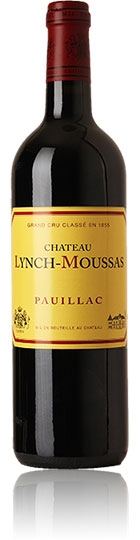
Château Lynch-Moussas, Pauillac, 2006

Back to a more 'classic' wine for this one. Tasted at a mini-Bordeaux tasting that covered Pauillac, Margaux and St Emillion, Lynch-Moussas was well regarded by fellow reviewers, but has been denigrated elsewhere, so was of interest to me. Costing £26, it's hardly a bargain-basement wine, but it's reasonably priced in comparison with many of its compatriots.

I have always liked Bordeaux wines that are more subtle, smooth and structured, as I feel that the New World often does the fruity wines better than France does. This is very much Bordeaux's forté and as such, I rarely buy a Bordeaux when looking for power - I look for finesse, and this wine will be judged by that criterion.
Nose: A nice array of aromas coming through here. Not all are instantly identifiable, but they remain there long enough to be found by a trial and error process. There's vanilla and spice immediately with a hint of perfumed flowers - we thought lilac, but weren't quite sure. Behind the floral aromas there was a touch of woodsmoke and a light hint of strawberry (or perhaps very diluted cassis). A fairly typical Pauillac then, although with an almost Margaux-like perfume.

Palate: Rather lovely, but became less so after a few sips as a touch of astringency came into it. Cherry and red fruits are present and it's extremely smooth although a hint of acidity and spice came into affairs after a short time. It began to change into a sweet and sour taste of raspberry - again, I was unable to find much cassis, which I had expected would be much more prominent, which struck me as a touch odd. That lilac taste came flitting in and out and had one reviewer convinced he was drinking a Margaux. Funnily, on a re-taste an hour or two afterwards, this became a much smoother and more characterful wine. Whilst there still wasn't cassis as such, the fruit was more pronounced, softer and more interesting. Would be lovely with all kinds of food and it seems a well-structured wine.

Body: Medium-bodied, medium alcohol and fairly low tannins and became perhaps a touch thin after drinking a (very small) glass of it.

Finish: A fairly classic finish in that it softens almost imperceptibly but has a reasonable level of development as a dash of fruit makes a late resurgence to remind you to take another sip.

Conclusion: Lynch-Moussas is a reasonably sophisticated wine with an interesting array of aromas (especially the floral ones). Well-balanced and smooth, but without a great deal to really excite, I think this would be excellent with classic roasts. Mint-crusted lamb would suit it ideally. 

Points: 86-87. Nice level of sophistication, but not quite enough to get into the serious points. Drinking now and unlikely to improve in the bottle, is it really worth £26? 

Glenelly Lady May 2008


Hello all, after a brief hiatus due to various work commitments, we're back to South Africa for this post. Glenelly is a South African vineyard with a rather intriguing 'twist'. It's owned by none other than Madame de Lencquesaing, the former owner of the exceptional 'super second' Chateau Pichon Longueville Comtesse de Lalande, who feels South Africa's soils, grapes and climate provide a perfect canvas for Bordeaux-style winemaking. If you have read one or two of my other posts, you'll know it's clear that I also subscribe to this opinion!

As Madame de Lencquesaing's first name is May, the name of this wine provides us with a fairly strong clue as to what to expect. A Bordelais statement in a New terroir, so certainly something different from the usual meaty smokiness that I love so much in South African Cabernet Sauvignon blends. If I remember correctly from the back of the bottle (now in the recycling somewhere in climes unknown), the statue on the front of the bottle is a very young version of Lady May herself! So, onto the wine - decanted for 2 hours and tasted again after 4.

Colour: I felt the need to include a colour section for this wine in particular (as I haven't bothered doing it for other wines so far) because it really is quite extraordinary. I removed the cork and there was almost no colour to it - a rather pale pink that I would associate with Burgundy rather than a heavy Cab Sauv - so I was extremely surprised when I poured out an almost black wine. It is incredibly deep and almost entirely opaque. Quite intriguing that it stained the cork so little. If someone knows how/why this is I would appreciate a comment about it!


Nose: Whoomph. There is an almost overpowering aroma of coffee. There is a hint of hay and barnyard aromas - a slight sourness that perhaps leads into some intensely dark chocolate. Fruit is not overly evident and was not overly evident on later tasting. This, I believe, is where the fact that the wine is so young has had its effect. That's not to say that the nose is closed, as it is certainly not, it is simply that it is currently slightly unbalanced and I look forward to seeing the effect of some time on the bottle (although 10 years may be too long to wait!). There's some real heat in this nose - reminiscent of chilli chocolate (Montezuma Chocolate make it and it's quite intriguing!). In sum: Coffee, hay, dark dark chocolate and some chilli and heat at the end.


Palate: At the first taste I noted massive coffee backed by 'solid' fruit - the fruit, however, was tight and restrained. This, I am sure, is the emphasis of Lady May's Bordelais heritage and a conscious move away from South African style to a more Old World effort. The bitterness of the coffee and dark chocolate definitely comes through near the end, but there isn't harshness to it, so it's not a negative point. On the later tasting (4 hours decanted) I got blackcurrant coming to the fore with the coffee moving to a supporting role (but a rather loud supporting role!). After 5 hours the coffee began to calm down a little, encouraging me to keep trying it.

Body: The body is extremely full and this is definitely a heavy Lady. The tannins are enormous and it's clear from the first smell that this wine has been made with the intention of a long cellaring.

Finish: As above, fading away into more savoury aromas. A hint of leather coming through (perhaps the evolved version of the slightly sour hay and barnyard aromas in the nose?), coffee and a touch of blackcurrant, but it's elusive. 

Conclusion: It must be remembered that this is a VERY young wine and intended to be cellared for a good few years before drinking, so this review will most certainly be coloured by the fact that I am drinking this young. As a result, I find it extremely hard to give it a rating as I don't think it will be a fair analysis. I found this wine extremely interesting, but was it really a wine I would drink? I think that it's only fair to wait for at least another 2 years before drinking and ideally 5 or 10. Given all of the expertise that has gone into it, it's certainly an accomplished wine and it is certainly making a statement. I had a heated debate with a reviewer who referred to this as 'typically South African' that divided the room, but I stand by my view that this is a Bordelais wine residing in a South African terroir. 

Points: Anything from 85-91. 
I would love to hear if anyone else has tried this and what their feelings were! Next time I will do an overnight decant and see what it's like in the morning.